Somewhere between the bin lorry at half past six and the streetlamp that glows straight through a gap in the curtains, most people give up and just accept a worse night's sleep than they need to have. But the fix usually isn't more willpower or a stronger coffee habit the next morning. It's matching the right tool to the right problem, because white noise, blackout curtains and earplugs solve three genuinely different things, and buying all three without knowing which one you actually need is how drawers end up full of unused gadgets.
This guide breaks down what each option is built for, where it falls short, and how to combine them sensibly if your street throws more than one problem at you at once, which, if you live near a bus route, a corner shop with an early delivery van, or a neighbour who likes the telly loud after midnight, it probably does.
Sorting out what problem you're actually trying to solve
Before spending money, it helps to name the disruption precisely. "I sleep badly" isn't a problem you can buy your way out of. "A car alarm at 2am wakes me and I can't get back to sleep for forty minutes" is something you can actually address.
Light and sound are handled by different senses and different parts of the brain, so a tool built for one rarely helps with the other. Blackout curtains do nothing for a barking dog. Earplugs do nothing for a streetlight cutting across your pillow at 3am. White noise doesn't stop light, and it can make some people more alert if the sound itself is annoying rather than soothing.
- Sudden, unpredictable noise (motorbikes revving, a neighbour's door slamming): white noise or earplugs, tried together if one alone isn't enough.
- Constant low light (a streetlamp, a security light from next door, summer dawn at 4.30am): blackout curtains or blinds.
- Ongoing background hum (a busy road, a nearby train line): white noise machines tend to help more than earplugs, since they mask rather than block.
- A partner's snoring: earplugs first, white noise second, and if it's loud or irregular breathing rather than plain snoring, that's worth mentioning to a doctor rather than just muffling it.
Write down, for three nights running, what actually wakes you or keeps you awake. Most people assume it's "everything" and discover it's actually one specific thing happening at a specific time, like the 5.40am recycling collection on a Tuesday.
How white noise machines work and their limits
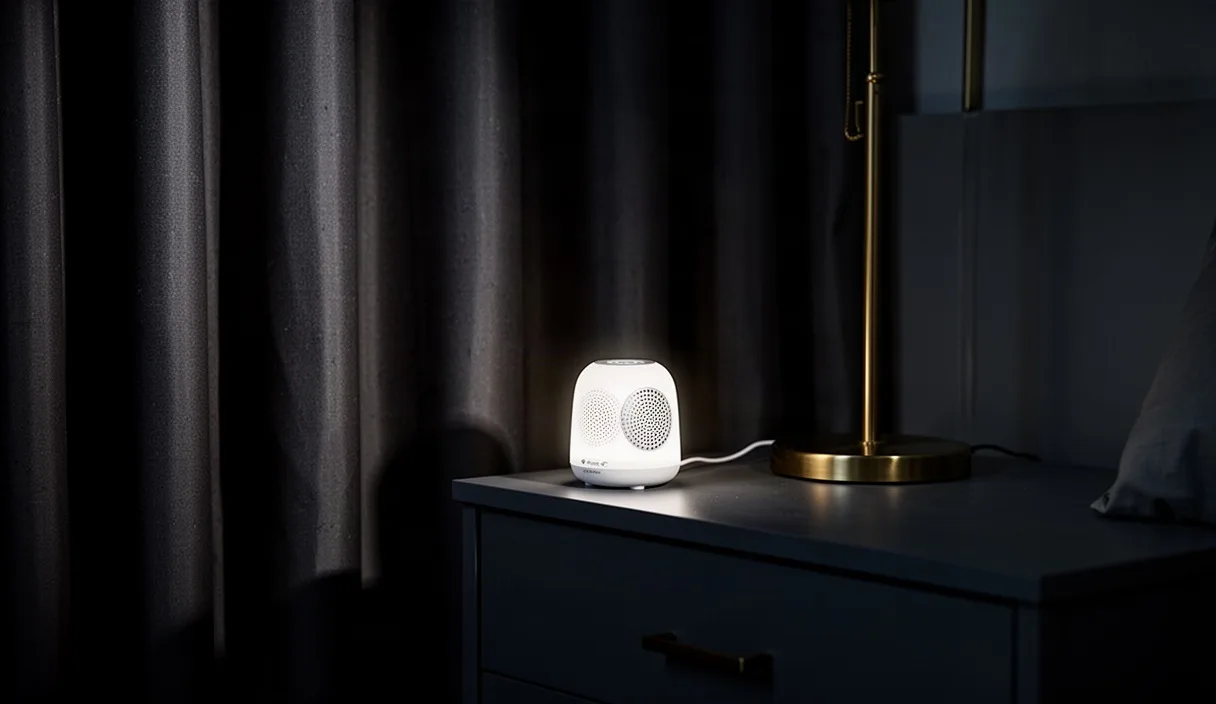
White noise works by raising the ambient sound floor in the room so that sudden spikes, a car door, a cough through a thin wall, a pipe knocking, become smaller relative to the background and less likely to jolt you awake. It's masking, not silence. A machine running at a steady 50 to 60 decibels can make a 70-decibel noise spike feel far less jarring than it would in an otherwise silent room.
Not all "white noise" is the same. True white noise has equal energy across all frequencies and sounds like static or a detuned radio. Pink noise, which many machines now offer, has more energy at lower frequencies and sounds closer to steady rain or wind, which a lot of people find gentler. Brown noise is deeper still, closer to a distant rumble. There's no single correct choice, it's genuinely a matter of what your ears settle into without irritation.
The main limits: white noise doesn't work well against very loud, sharp, or emotionally loaded sounds, a smoke alarm, a crying baby in another room, an argument two floors up. It can also become a dependency of sorts, where travelling without your machine or app leaves you far more sensitive to hotel noise than you used to be. And running a machine loud enough to mask heavy traffic all night, above roughly 60 decibels for eight hours, isn't something audiologists recommend as a long-term habit, particularly for children.
- Standalone machines cost roughly the same as a takeaway meal and don't rely on your phone battery or a router going down.
- Phone apps are free or cheap but tempt you to check the phone, which somewhat defeats the purpose.
- Fans are the original white noise machine and cool the room as a side benefit, useful in a stuffy upstairs bedroom in July.
What blackout curtains solve and what they don't
Blackout curtains block light, full stop, and that matters more than people expect. Even dim light, well below what you'd notice as "bright," can suppress melatonin production and shift your body's sense of what time it is. A streetlamp shining through thin curtains at 2am, or a midsummer dawn arriving at 4.30am, can nudge your internal clock earlier than you'd like, even if you don't consciously wake up.
Proper blackout curtains use a tightly woven or coated fabric, usually with three layers: a decorative outer layer, a middle blackout lining, and sometimes a thermal layer too, which is handy in an older house with draughty sash windows. Cheap "blackout" curtains that are just a dark colour without a proper lining will dim a room but won't get it truly dark, and you'll still see the shape of the window at night.
What they don't fix:
- Light leaking around the edges and top of the curtain, which is the single most common failure point, sold widely because most curtains are hung a few inches narrower than the window frame.
- Any noise whatsoever.
- Blue light from your own phone or a bedside alarm clock's display, which is a separate habit to manage.
- Heat: some blackout fabrics trap warmth, which can be uncomfortable in a small bedroom in August.
A cheap fix worth trying before buying new curtains: fit the existing curtains onto a rod that extends at least four inches past the window frame on each side, and add a blackout lining separately if the fabric you already like isn't for sale in a blackout version. Blackout blinds fitted inside the window recess, used behind curtains, close the side gaps that curtains alone almost always leave.
Earplugs: comfort, safety and effectiveness
Earplugs physically block the ear canal, which makes them the most direct tool against most household and street noise, but only if they're the right type and fitted properly. Foam earplugs, the disposable orange or yellow ones, are cheap and can reduce noise by around 25 to 33 decibels when rolled tightly and inserted so they expand inside the canal rather than sitting at the entrance. Most people underuse them by not rolling them thin enough or not pushing them in far enough.
Silicone putty earplugs mould to the shape of your ear and outer canal rather than going inside it, which some side sleepers find more comfortable against a pillow, though they tend to reduce noise slightly less than a well-fitted foam plug. Reusable flanged earplugs, similar to what's used at concerts, sit somewhere in between and last longer, useful if you're going through a box of foam ones every few weeks.
Safety-wise, earplugs are generally fine for nightly use, but a few things are worth knowing:
- Wax build-up is more common with regular earplug use, so if your ears feel blocked or itchy, that's worth a chat with a pharmacist or GP rather than digging around with a cotton swab.
- They muffle alarms, including smoke alarms, so anyone with young children, a health condition that needs monitoring overnight, or a job requiring an early call should think carefully about whether blocking that much sound is appropriate.
- Custom-moulded earplugs from an audiologist cost more but solve chronic discomfort for people whose ear canals don't suit standard sizes.
Earplugs don't touch light at all, and they won't stop a mattress-shaking bass line from a neighbour's speaker, since that's felt through vibration as much as heard.
Combining tools for street noise and streetlights
Most real bedrooms have more than one problem at once, which is why the three tools work better layered than chosen individually. A room facing a main road with a streetlamp directly outside the window is a light problem and a noise problem happening at the same time, and treating only one leaves the other doing damage.
A sensible combination for a noisy, well-lit street-facing room:
- Fit blackout curtains on a rod extending past the frame, or blackout blinds inside the recess, to deal with the streetlamp and early dawn light.
- Add a thin secondary curtain or blackout blind behind the main curtain if any light still creeps round the edges, particularly common with bay windows.
- Run a white noise or fan at a steady, moderate volume, roughly the loudness of gentle rainfall, to smooth out passing traffic and the general low hum of the street.
- Keep foam earplugs on the bedside table for nights when something sharper cuts through, a delivery van reversing, a group walking home loudly, without relying on them every single night.
This layered approach also means you're not relying on any single tool to do all the work, which matters because circumstances change: a new streetlamp gets installed, a neighbour starts working night shifts, a road gets resurfaced and suddenly carries more traffic. Reassessing every few months, rather than assuming the original setup still fits, saves money and frustration.
Common mistakes
People often buy the most expensive version of one tool instead of the correct combination of cheaper ones. A premium white noise machine won't fix a badly fitted curtain letting in a slice of streetlight across the bed. Others run white noise loud enough to be uncomfortable rather than gentle, which can itself become a new sleep disruptor. And a common curtain mistake is buying the right fabric but the wrong rod, leaving gaps at both sides that let in exactly the light the curtains were bought to block.
Another frequent error is treating earplugs as a permanent fix for a noise problem that's actually a household or building issue, a squeaky floorboard, a poorly insulated party wall, a loose window pane rattling in the wind. Those are often worth raising with a landlord, letting agent or, for owner-occupiers, a tradesperson, rather than muffling nightly with foam.
What to try next
Start by naming the specific disruption over three nights rather than guessing. If it's light, fix the curtain fit before buying new fabric. If it's steady background noise, try a fan or a cheap white noise app for a week before spending on a dedicated machine. If it's sudden sharp sound, foam earplugs, rolled thin and pushed in properly, are the cheapest and most direct test.
If sleep problems persist despite a genuinely dark, quiet room, disturbed breathing, loud irregular snoring, or ongoing restful sleep support are worth discussing with a GP or a sleep specialist rather than solved with another gadget. Environment tools handle the street and the streetlamp. They're not a substitute for medical advice when something else is going on.