Winter in most of Canada means one thing for bedrooms: dry, forced-air heat running for months at a stretch, sometimes from October in Thunder Bay right through to April in Saskatoon. That kind of heat changes how a mattress feels against your skin, how it holds body warmth, and how quickly it dries out after a hot shower before bed. A mattress that felt fine in a Vancouver condo with mild, damp winters can feel completely different in a Winnipeg bungalow where the furnace runs nonstop and the air is bone dry.
This guide walks through the three main mattress types sold across Canadian stores, from Sleep Country locations in strip malls to smaller shops in Halifax and Kelowna, and looks at how each one responds to our climate swings, our basements, and our habit of cranking the thermostat the moment the first frost hits the windshield.
How Canadian home heating affects mattress comfort
Forced-air furnaces, the most common heating system in Canadian houses outside of Quebec's baseboard-heavy homes, dry out indoor air fast. Indoor humidity can drop to somewhere between fifteen and twenty five percent relative humidity in January, well below the thirty to fifty percent range most sleep researchers consider comfortable. Dry air pulls moisture from skin and from the mattress surface itself, which affects how foam and fabric layers feel over time.
Dense foam mattresses tend to trap body heat more than open-coil designs, which is a bigger deal in a heated bedroom in February than most shoppers expect. If your bedroom sits directly above a furnace room or duct run, as is common in older Ontario and Prairie homes, the floor and mattress base can run several degrees warmer than the rest of the house.
Radiant or hydronic heating, more common in parts of Quebec and in newer builds in British Columbia, warms a room more evenly and doesn't dry the air as aggressively as forced air. If you have this kind of heating, mattress temperature is less of a concern and your decision can lean more on support and firmness preference.
- Homes with forced-air furnaces: prioritize breathable covers and hybrid or coil-based support to avoid overheating.
- Homes with baseboard or radiant heat: temperature retention matters less, so comfort and pressure relief can take priority.
- Homes with a humidifier running through winter: foam mattresses hold up better since the air isn't as punishingly dry.
Memory foam: pros, cons and where it works
Memory foam mattresses, the kind popularized by brands like Endy and Casper before hybrid designs took over much of the Canadian market, use dense polyurethane layers that respond to body heat and weight. This makes them good at cradling shoulders and hips, which is why many people with joint pain or side-sleeping habits gravitate toward them.
The trade-off is heat retention. In a heated bedroom in Edmonton in January, with the furnace running most of the night, a thick memory foam mattress can feel noticeably warmer by two or three in the morning than it did at bedtime. Newer foams use gel infusions or open-cell structures to reduce this, but they don't eliminate the effect entirely.
Memory foam works well in basement bedrooms where the ambient air is naturally cooler, in condos with electric baseboard heat that don't run as constantly as a furnace, and for anyone who tends to feel cold at night and wants a mattress that holds warmth rather than sheds it. It's a poor match for hot sleepers in older homes with unreliable air circulation, particularly semi-detached houses in Toronto's east end where second-floor bedrooms often run warmer than the rest of the house.
Practical notes on memory foam
- Look for a cover with a wool or Tencel blend rather than pure polyester, since it breathes better through dry winter months.
- Give a new foam mattress forty eight hours to off-gas and expand before judging its firmness, standard practice with bed-in-a-box shipments.
- Rotate the mattress head to foot every three months to even out compression from consistent sleeping positions.
Hybrid mattresses: what the layers actually do
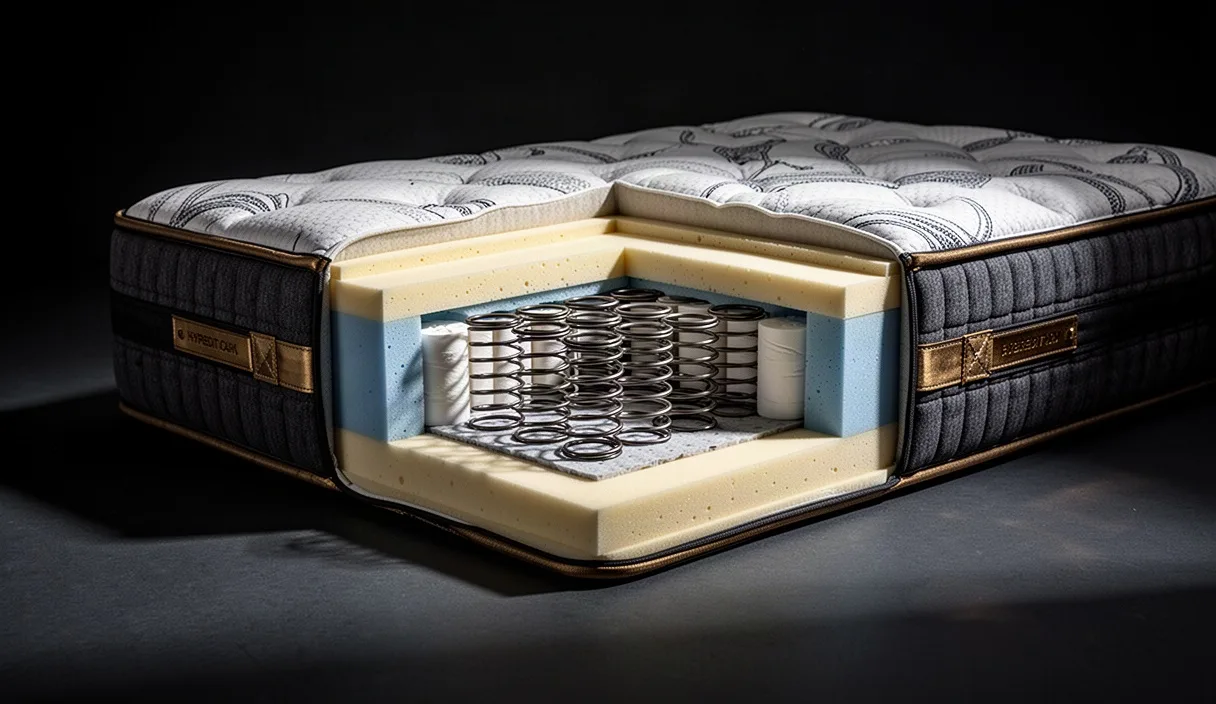
Hybrid mattresses combine a coil support base with a foam or latex comfort layer on top, usually two to four inches. The coils allow air to move through the mattress core, which is the main reason hybrids run cooler than all-foam builds, a real advantage during a Prairie winter with the heat cranked to twenty two degrees.
The coil layer also affects edge support and how the mattress handles weight distribution for couples. In a queen or king mattress shared by two people of different builds, pocketed coils respond independently to each person's weight, which reduces the motion transfer that all-foam mattresses sometimes struggle with.
Companies like Douglas and Logan & Cove build hybrids specifically marketed toward Canadian buyers, often citing temperature regulation as a selling point for exactly this reason. The foam comfort layer still provides some contouring, so hybrids are often described as a middle ground between the plush cradle of memory foam and the bounce of a traditional innerspring.
| Feature | Memory Foam | Hybrid | Innerspring |
|---|---|---|---|
| Heat retention | Higher | Moderate | Lower |
| Motion isolation | Strong | Moderate | Weak |
| Edge support | Weak | Strong | Moderate |
| Typical lifespan | 7 to 8 years | 7 to 9 years | 6 to 7 years |
Innerspring: still relevant for some homes
Traditional innerspring mattresses, built with an open coil system and a thin comfort layer, have mostly been pushed out of mainstream retail by hybrid and foam alternatives, but they still show up in cottage bedrooms, rental units, and guest rooms across the country. Their main strength is airflow. An open coil design lets air pass through the entire mattress structure, which keeps the sleeping surface noticeably cooler than foam.
This makes innerspring a reasonable choice for a cottage bedroom in Muskoka or the Okanagan that only gets used in summer, when heat retention is the opposite of what you want. It's also common in basement guest rooms where the space runs cool year-round and a firmer, more traditional feel is fine for occasional use.
The downside is durability and comfort over years of nightly use. Coils sag and squeak faster than pocketed coil hybrids, and the thin comfort layer offers little pressure relief for side sleepers or anyone with back pain. For a primary bedroom used three hundred nights a year, most sleep specialists and mattress retailers in Canada now steer buyers toward hybrid or foam options instead.
Basement bedrooms and humidity considerations
Basement bedrooms are common in Canadian homes, whether as a finished rec room converted for a teenager, an in-law suite, or a rental unit in cities like Hamilton or Winnipeg where basement apartments are part of the housing stock. These rooms run cooler than the rest of the house, but they also tend to hold more humidity, especially in older homes without proper vapour barriers or in spring when snowmelt raises the water table.
A mattress placed directly on a basement floor or on a low platform bed is at higher risk of moisture buildup underneath, which can lead to mould on the base of the mattress over time. This is a common enough issue that most Canadian mattress warranties, including those from Sleep Country's private labels, explicitly exclude damage from moisture exposure if the mattress wasn't placed on a slatted or ventilated base.
For a basement bedroom, a slatted platform bed or a metal frame with breathable mesh support works better than a solid box spring or direct floor placement. If the basement has a history of dampness, a dehumidifier running at a moderate setting, and periodically checking under the mattress for condensation, is worth the effort. If you notice a persistent musty smell or visible spotting, that's a situation to bring in a professional for a moisture or mould assessment rather than guessing.
Questions to ask before buying
Before buying a mattress in Canada, whether from a big box retailer or a smaller local shop, it helps to ask a few direct questions that go beyond firmness preference.
- What is the return or trial period, and does it apply if you live somewhere the retailer doesn't service directly, such as a rural address outside major delivery zones?
- Does the mattress cover use natural fibres like wool or cotton, which handle dry winter air better than synthetic-only covers?
- What is the warranty's stance on moisture damage, particularly relevant if the mattress is going into a basement room?
- Is the mattress compressed and shipped in a box, and if so, how long does the retailer recommend for full expansion in a cold climate, since foam expands more slowly in a cool room?
- What is the coil count and gauge for hybrid or innerspring options, since lower gauge numbers generally mean thicker, more durable coils?
A simple comparison summary
For anyone who wants the short version before walking into a showroom on a Saturday afternoon, here's how the three types generally stack up for Canadian conditions.
- Memory foam: best for cooler rooms, side sleepers, and anyone who runs cold at night. Weakest in warm, forced-air heated bedrooms.
- Hybrid: the most balanced option for most Canadian homes, particularly where forced-air heating is common and couples share the bed.
- Innerspring: fine for cottages, guest rooms, or occasional-use spaces, less suited to nightly use in a primary bedroom.
Common mistakes
One frequent mistake is buying a mattress based on how it feels in an air-conditioned showroom in July, then being surprised when it sleeps warm in a heated bedroom in January. Testing firmness for a few minutes doesn't reveal much about long-term temperature behaviour.
Another is placing a new mattress directly on a solid, non-ventilated base in a basement without checking humidity levels first, which can void a warranty and shorten the mattress's usable life well before the coils or foam would otherwise wear out.
A third mistake is ignoring delivery timing in winter. Mattresses shipped in unheated trucks during a cold spell in, say, rural Manitoba, can arrive stiff and take longer than the usual two days to fully expand. Give a winter-delivered mattress at least a week in a heated room before deciding it's the wrong firmness.
Next steps
Start by figuring out what kind of heating your bedroom actually has and how it behaves over a full night, not just at bedtime. If you sleep hot and live in a forced-air home, lean toward hybrid. If you run cold and your room stays cool regardless of season, memory foam is worth testing. If the mattress is going into a basement, sort out the base and check for dampness before the mattress arrives, not after.
From there, use the questions above with whichever retailer you're considering, ask specifically about winter delivery and expansion times if you're ordering between November and March, and if you notice any lingering moisture or mould smell in a basement bedroom, treat that as a matter for a home inspector or moisture specialist rather than something to solve with a new mattress alone.