By late June, most of us across the Prairies and Ontario have stopped checking the weather app for rain and started checking the humidex instead. A muggy night in Winnipeg or Regina can feel worse than a dry 32 in Calgary, and a July stretch in Toronto or Ottawa with the humidity sitting heavy off the lake can turn a bedroom into something closer to a sauna. Sleep suffers first, long before anyone starts complaining about the daytime heat.
This isn't about buying every gadget at the Canadian Tire cooling aisle. It's about using the tools most households already have, timed and placed properly, plus knowing when a window unit or a call to an HVAC technician actually makes sense. Below is a practical, room-by-room approach for the kind of heat that settles in for a week at a time, the way it does most Julys from Brandon to Belleville.
Why summer heat disrupts sleep more than people assume
The body needs to drop its core temperature by roughly 1 degree Celsius to fall into deep sleep. When a bedroom sits at 26 or 27 degrees with high humidity, that drop happens slower or not at all, which is why hot nights often feel like a string of light, interrupted dozes rather than real rest. This matters more on the Prairies than people expect, because our homes are built and insulated for cold winters, not for holding out heat during a July heat dome.
Humidity compounds the problem. A 28-degree night in dry Saskatoon air feels different than a 28-degree night in Toronto with humidity pushing the humidex past 35. Sweat can't evaporate efficiently in damp air, so the body's main cooling mechanism stalls out. This is also why a fan alone sometimes isn't enough on the muggiest Ontario nights, moving air helps evaporation, but it can't do much if the air itself is saturated.
Older homes in neighbourhoods like Wolseley in Winnipeg or the Annex in Toronto often have poor attic insulation and single-pane windows, meaning bedrooms on the second floor can run 3 to 5 degrees warmer than the main floor by evening. Anyone dealing with chronic sleep disruption during heat waves, especially older adults or people with cardiovascular conditions, should mention it to a doctor, since heat stress can affect blood pressure and hydration overnight.
Timing your blinds and curtains during the day
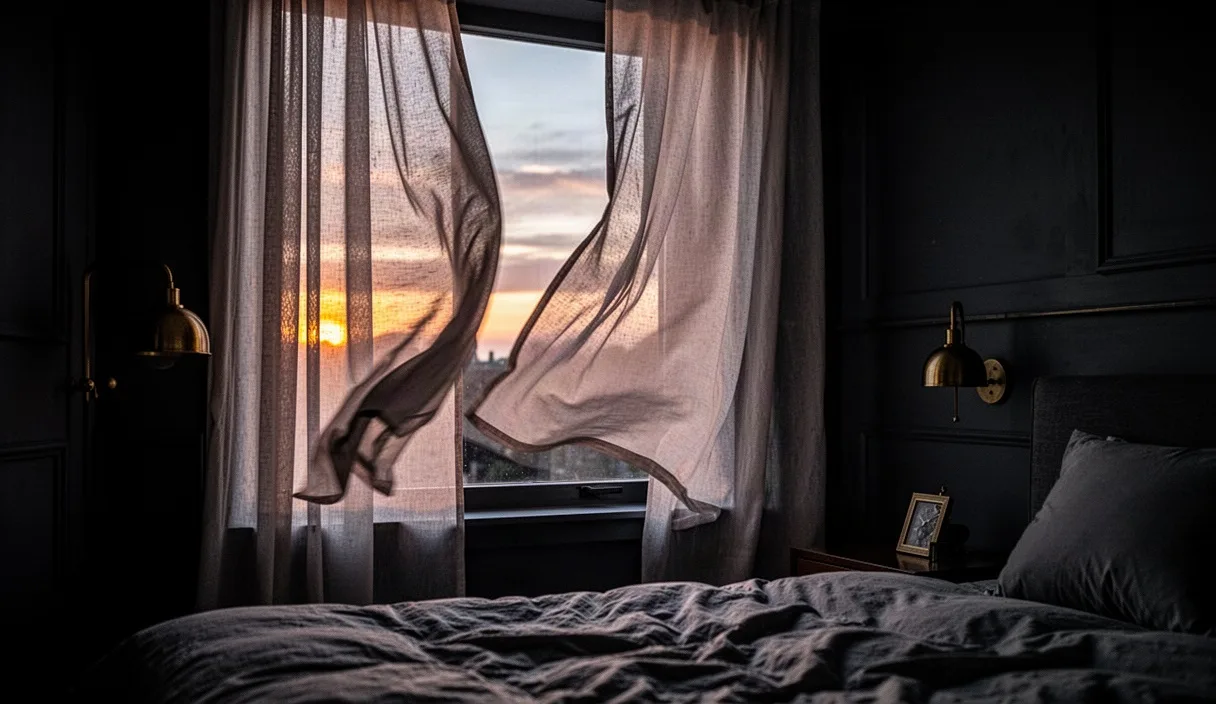
The single cheapest heat-control tool in most houses is already hanging in the window. The mistake is using it at the wrong time. Curtains and blinds need to go up before the sun hits that side of the house, not after the room already feels warm.
- East-facing bedrooms: close blinds by 7 a.m. during peak summer, since morning sun on brick or siding in cities like Regina and Ottawa can heat a room noticeably by 9 a.m.
- West-facing bedrooms: this is the bigger problem for most Prairie and Ontario homes, since west sun in July hits around 4 to 5 p.m. and keeps heating the room until sunset near 9 p.m. Close blinds by early afternoon, not at dinner time.
- Blackout curtains vs. blinds: blackout curtains block more radiant heat than standard blinds, cutting incoming heat noticeably compared to slatted blinds alone, according to most manufacturer testing, though results vary by fabric weight and window size.
- Reopen at dusk: once outdoor temperature drops below indoor temperature, usually after 9 or 10 p.m. in summer, open windows and curtains to let the room start exchanging air.
Light-coloured curtains reflect more radiant heat than dark ones, which matters more than people think. A dark navy curtain in a west-facing Saskatoon bedroom will absorb heat and re-radiate some of it into the room by evening, while a pale linen or cotton curtain reflects more of it back outside.
Fan placement that actually cools a room
A fan doesn't cool air, it moves it, and moving air helps sweat evaporate faster, which is why placement matters more than fan strength. A cheap box fan angled correctly outperforms an expensive tower fan pointed the wrong way.
The cross-breeze method works well in older Prairie bungalows with windows on opposite walls: one fan blows outward from a hot window in the early evening to push warm air out, then later at night a second fan draws cooler air in from the opposite side. In row houses and semis common in Toronto and Hamilton, where there's often only one operable bedroom window, point a fan directly at the open window facing outward for the first hour after sunset to purge hot air, then reverse it to blow toward the bed.
For anyone using a ceiling fan, the rotation direction matters by season. In summer, the fan should spin counterclockwise, which pushes air straight down and creates a wind-chill effect on skin. Most fans have a small switch on the motor housing to reverse direction, worth checking every spring since it's often left in winter mode.
Placing a shallow tray or bowl of ice in front of a fan is a common trick, but it only cools a small area for a short time and does nothing for the room's overall temperature. It's fine as a short-term fix for a single bad night, not a real strategy for a heat wave week.
Window units versus central air for a single bedroom
Plenty of homes across the Prairies and Ontario have central air for the main floor but nothing dedicated to bedrooms upstairs, which is often the hottest part of the house by nightfall. Deciding between a window unit and running central air harder comes down to square footage, budget and how often the heat becomes a real problem.
| Factor | Window Unit | Central Air |
|---|---|---|
| Upfront cost | Roughly $180 to $450 CAD for a bedroom-sized unit | Already installed, or $4,000+ CAD if adding new |
| Running cost | Lower, cools one room only | Higher, cools whole house even if only one room is occupied at night |
| Installation | DIY in under an hour for most double-hung windows | Requires licensed HVAC technician |
| Best for | One or two bedrooms with heat problems | Whole-house comfort, older ductwork upgrades |
A 6,000 to 8,000 BTU window unit is generally enough for a standard 12-by-12-foot bedroom common in prewar Ontario homes or Prairie bungalows. Sizing too large wastes energy and can leave the room feeling damp, since an oversized unit cools the air before it has time to properly dehumidify it. Anyone unsure about sizing or whether their electrical panel can handle a window unit on an older circuit should ask an electrician or HVAC contractor before buying, especially in houses built before the 1970s.
Bedding and mattress choices for hot nights
Bedding matters as much as airflow once a room is already close to comfortable temperature. Synthetic sheets, especially cheaper polyester blends sold in big-box stores, trap heat and moisture against skin. Cotton percale, linen, and bamboo-viscose blends breathe better and are worth the switch for the three or four hottest months.
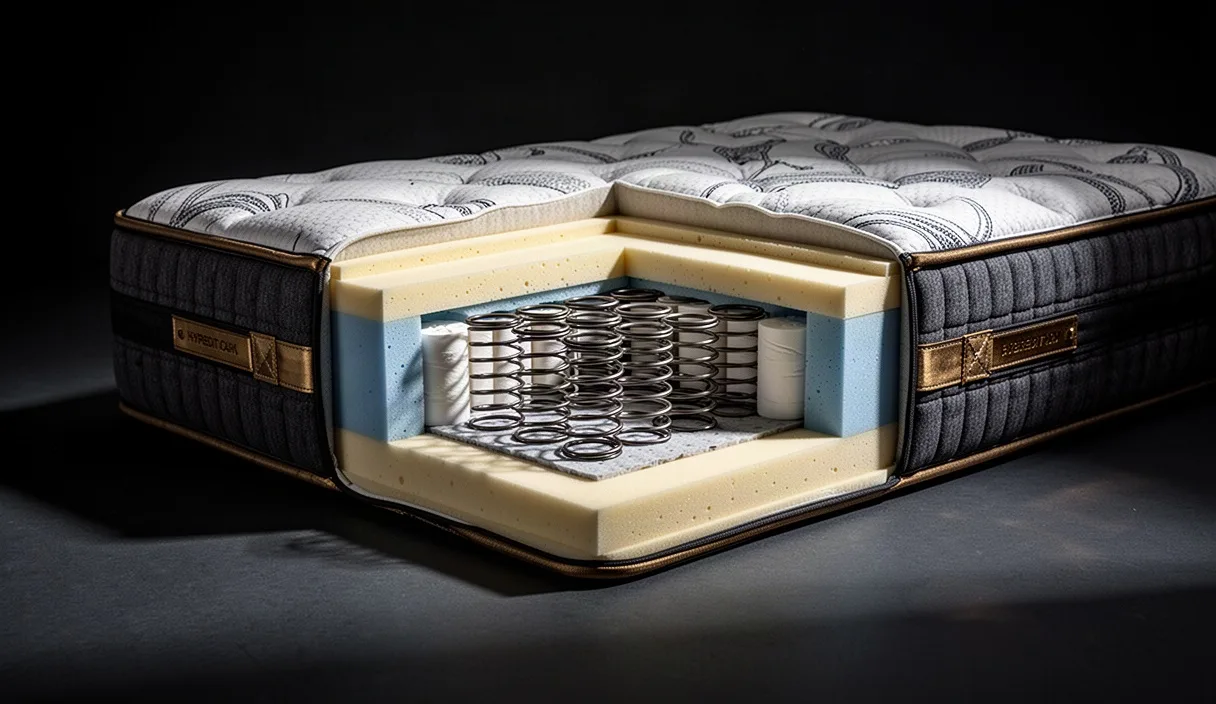
Mattress material plays a bigger role than most people realize. Memory foam retains body heat noticeably more than coil or hybrid mattresses, since the dense foam structure doesn't allow much airflow. Anyone sleeping hot on a foam mattress can try a breathable mattress topper, cotton or wool-based options work better than another layer of foam, which would only make things worse.
A lighter duvet or simply switching to a top sheet only during July and August, rather than a full duvet, helps regulate temperature without needing to touch the thermostat. Some Prairie households keep two sets of bedding entirely, a heavier flannel set for winter and a lightweight cotton set that comes out around the May long weekend and stays until Labour Day.
A cooling checklist for heat wave weeks
- Close blinds and curtains before direct sun hits that side of the house, not after the room feels warm.
- Run ceiling fans counterclockwise in summer, check the direction switch every spring.
- Open windows and use cross-breeze fan placement once outdoor temperature drops below indoor temperature, usually after sunset.
- Switch to cotton, linen or bamboo sheets and a lighter duvet or top sheet for the hottest stretch.
- Check window unit sizing against room square footage before a heat wave hits, not during one.
- Keep water nearby overnight and watch for signs of heat exhaustion in older adults, infants or anyone with existing health conditions, and contact a health care provider if symptoms like dizziness, confusion or a racing pulse appear.
Common mistakes
The most frequent mistake is closing curtains too late, after the room already feels hot, which only traps heat that's already inside. Another is running a fan all night pointed at a closed window, which just recirculates the same warm air instead of exchanging it. People also tend to oversize window units, assuming bigger is better, when an oversized unit actually cools too fast without removing enough humidity, leaving the room cold but clammy.
A less obvious mistake is ignoring attic heat. In many older Ontario and Prairie homes, an unventilated attic can sit at 50 degrees or higher by late afternoon and radiate that heat into upstairs bedrooms well into the evening. A simple attic fan or improved soffit ventilation, best assessed by a contractor, can noticeably reduce how hot upstairs rooms get by bedtime.
Next steps for the season ahead
Start with the free fixes: retime the blinds, flip the ceiling fan switch, and try the cross-breeze fan setup for a few nights before spending money. If the room is still uncomfortable after that, a modestly sized window unit is a reasonable next investment for one or two problem bedrooms, especially in homes without central air. For persistent heat issues tied to attic insulation, ductwork or electrical capacity, it's worth booking an assessment with a local HVAC contractor before the next heat wave rather than during one, since good technicians across the Prairies and Ontario tend to book up fast once the humidex climbs.