Twenty minutes doesn't sound like much, about the length of a sitcom episode or two cups of tea going from scalding to drinkable. But that short stretch, used the same way most nights, does more for getting to sleep than an hour of scrolling through advice at midnight ever will. This checklist breaks the twenty minutes into five-to-six minute blocks, the way you might time a recipe, so there's no guessing about what to do when.
None of this requires special kit. A lamp, a kettle, a notebook and a willingness to do roughly the same thing at roughly the same time each evening will cover it. The routine below is a starting point, not a script to follow to the letter. Adjust the minutes to fit your own evening, your flat, your household.
Why a short wind-down routine helps more than willpower alone
Telling yourself "I'll sleep better tonight" rarely works, because sleep isn't something you can force through effort. It's closer to digestion: it happens on its own once the conditions are right. A wind-down routine works by creating those conditions repeatedly, in the same order, until the body starts to recognise the pattern and downshift before you've even climbed into bed.
This is basically habit-stacking applied to the evening. Each small action, dimming a lamp, putting the phone in another room, becomes a cue. After a couple of weeks of repetition, the cues start doing the work that willpower can't. You stop having to decide to relax and start simply doing the next thing on the list.
Twenty minutes is long enough to matter and short enough to actually stick to on a Tuesday when you're tired and the dishes aren't done. Longer routines, the ninety-minute spa-evening versions found in some guides, often get skipped entirely because they feel like a chore. A short routine gets used.
Minute zero to five: leaving the day behind
Start by physically closing the day's loose ends rather than mentally trying to forget them. Write down tomorrow's three main tasks on a scrap of paper or in a notes app, then shut the laptop lid. This takes under two minutes and stops the "did I remember to..." loop that tends to surface right as your head hits the pillow.
Next, deal with the kitchen. Not a full tidy, just the essentials: kettle filled for the morning, dishes in the sink covered with a bit of water so they don't dry on, bin bag tied if it's due out. This is less about cleanliness and more about not walking into a chaotic kitchen the next morning, which sets a stressed tone before the day's even started.
Finally, change out of daytime clothes into whatever you sleep in, even if that's just tracksuit bottoms and a jumper for now. This is a strong physical signal, the body notices the shift from "outside clothes" to "home clothes" faster than most people expect. If you work from home, this step matters even more, since there's no commute to mark the boundary between work and rest.
Minute five to twelve: lowering light and noise
This is the longest block and does the heaviest lifting. Bright overhead lights tell the brain it's still daytime; the trick is to move to lamp light, ideally something warm-toned rather than the bluish white of most kitchen strip lighting. If you've got a dimmer, take it down gradually rather than all at once, in the same way dusk fades rather than switches off.
Turn down or off any background noise that's been running, the radio, a podcast, the telly left on for company. Silence can feel odd at first if you're used to constant sound, so a low, steady alternative such as a fan on low or a white-noise app works well as a stepping stone. Avoid switching straight from news bulletins or true crime to silence, since the content lingers in the mind longer than the sound does.
This is also the point to deal with phones properly, not just turning the screen face-down but moving the device to another room or at least out of arm's reach. A study frequently cited in sleep clinics found that simply having a phone within reach, even switched off, increases the odds of checking it "just once." Charging it in the hallway or kitchen removes that temptation entirely.
- Switch main lights for one or two lamps.
- Turn off television, radio, or podcasts.
- Move the phone out of the bedroom, or at minimum out of reach.
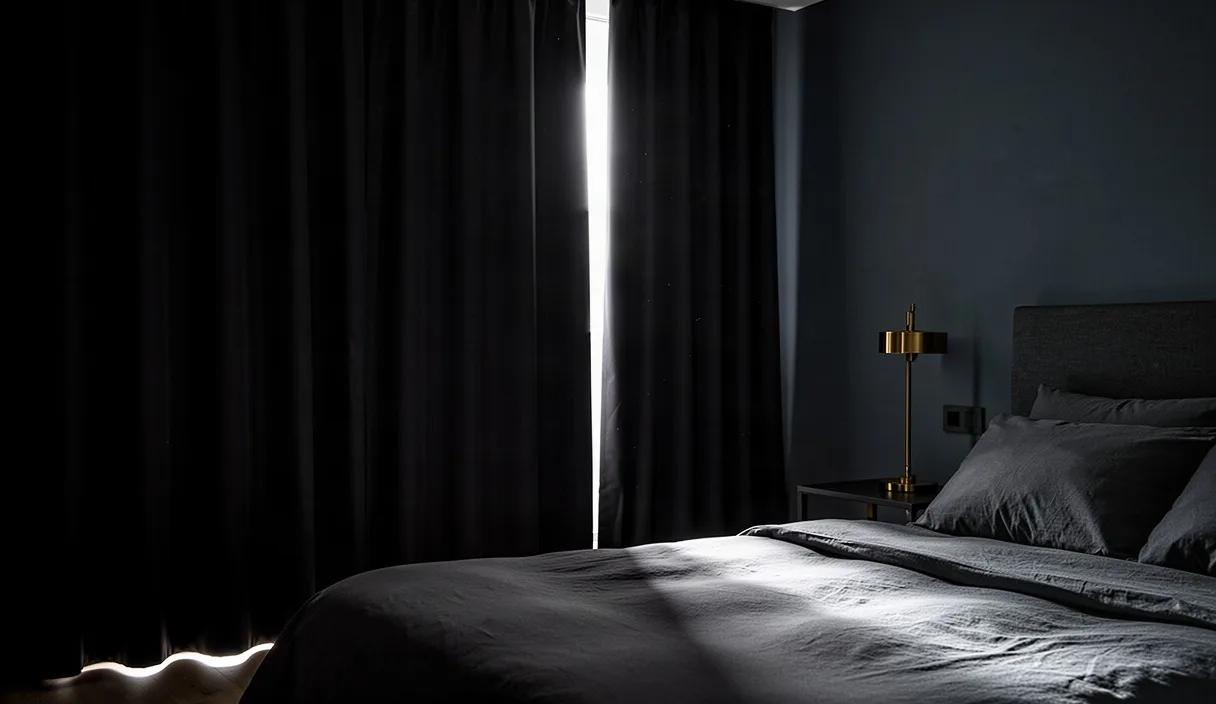
- If you use blackout curtains, draw them now rather than at the last minute.
Minute twelve to eighteen: quiet, low-stimulation activity
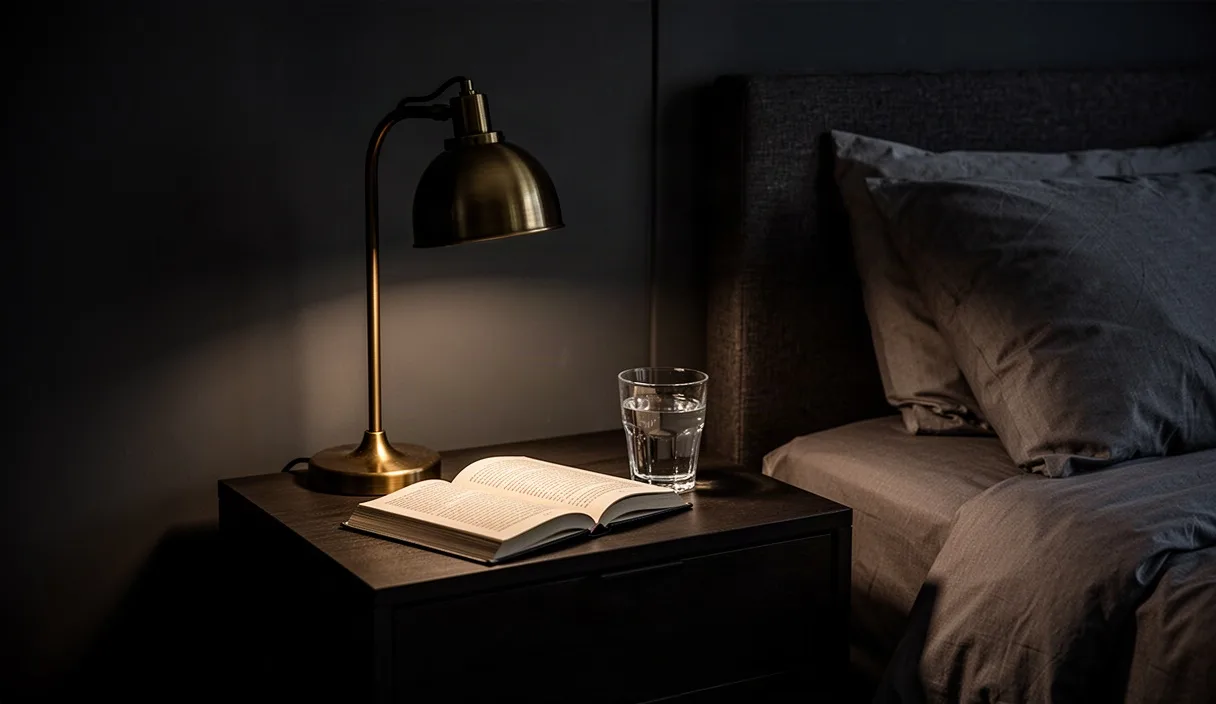
This block is for something with your hands or eyes that doesn't demand much from your brain. Reading a physical book works well for most people, ideally something you're not desperate to find out the ending of, since page-turners can do the opposite of settle you. A magazine, a crossword, or a few pages of a book you've read before all serve the same purpose.
Light stretching is another option, particularly for anyone who sits at a desk most of the day. Nothing strenuous, just a few minutes of shoulder rolls, neck stretches, or sitting on the floor with legs stretched forward. This isn't exercise in the fitness sense, it's more like unclenching muscles that have been tight since the nine o'clock meeting.
Journaling for a few lines can help too, particularly if worry tends to arrive the moment the lights go off. Writing down "what's on my mind" without trying to solve it, just naming it, often takes the edge off enough that it doesn't need solving right then. If anxious thoughts are a nightly, persistent problem rather than an occasional one, that's worth raising with a GP or a counsellor rather than managing alone through journaling.
Avoid anything screen-based here even if it seems calm, a nature documentary or a gentle video is still a screen, still emitting light, and still liable to turn into "just one more episode."
The final two minutes before lights out
The last two minutes are about the transition itself, not another activity. Use the bathroom, brush your teeth if that's not already done, and take one last look round the room: curtains shut, thermostat down a degree or two if it's winter, water glass filled if you tend to wake thirsty.
Get into bed a minute or two before you actually intend to try to sleep, rather than lying down and expecting to drop off instantly. This small buffer, lying still in the dark without pressure to perform, tends to work better than treating the moment of lying down as a deadline.
Some people find a slow count of breaths helps here, in for four, hold for four, out for six, repeated five or six times. This isn't a guaranteed trick, more a way of giving the mind something simple to do instead of running through tomorrow's calendar.
Adapting the routine for shared spaces
Not everyone has a spare room to retreat to, and plenty of households share a bedroom with a partner, a child, or in shared flats, with housemates through a thin wall. The lamp-lowering step still works in a shared bedroom, it just needs agreement in advance so one person isn't fumbling with a bright phone torch while the other's trying to wind down.
If a partner keeps different hours, a small clip-on reading light or a low-wattage bedside lamp lets one person read while the other sleeps, without the overhead light disrupting things. Earplugs or a white-noise machine can help block a partner's snoring or late-night typing without resentment building over it.
In flats with thin walls, noise from neighbours is harder to control, so the noise-reduction step may need to lean more heavily on masking sound, a fan, a white-noise app, rather than eliminating it at the source. For families with young children sharing a landing or nearby rooms, doing the "leaving the day behind" step earlier, before the children's own bedtime routine starts, often prevents the twenty minutes getting swallowed by household noise entirely.
| Situation | Adjustment |
|---|---|
| Shared bedroom, different schedules | Use a small clip-on light instead of the main lamp |
| Thin walls, noisy neighbours | Rely on a fan or white-noise app rather than silence |
| Studio flat, no separate room | Do the tidying step at a table, then move to the bed area only for the last two blocks |
| Household with young children | Start the routine straight after their bedtime rather than after all evening chores |
Common mistakes
Trying to do all twenty minutes on a screen, telling yourself that reading an e-book or scrolling a calming app counts as low-stimulation, undoes most of the benefit. The light and the notification risk are still there even if the content is gentle.
Treating the routine as all-or-nothing is another frequent trip-up. Missing one block, say the stretching, doesn't mean the whole evening's wasted, and skipping the routine entirely on a bad night doesn't mean starting again from scratch the next day. Consistency over weeks matters far more than perfection on any single evening.
Doing the routine at a different time each night, sometimes nine, sometimes midnight, weakens the cueing effect that makes it useful in the first place. Anchoring it to a rough window, even a forty-minute range, works better than an exact clock time that's impossible to keep.
Getting started tonight
Pick one version of this routine that fits your actual evening, not an idealised one, and try it for a fortnight before judging whether it's helping. Keep the phone out of the bedroom for those two weeks specifically, since that single change tends to have the biggest effect of anything on this list.
If sleep problems persist beyond a few weeks of a steady routine, particularly difficulty falling asleep most nights, waking frequently, or feeling unrested despite enough hours in bed, it's worth speaking to a GP rather than assuming a routine alone will fix it. Persistent restful sleep support sometimes has causes, from thyroid issues to sleep apnoea to medication side effects, that no amount of dim lighting or breathing exercises will resolve.
A one-page checklist version
- Minutes 0 to 5: Note tomorrow's tasks, sort the kitchen essentials, change into evening clothes.
- Minutes 5 to 12: Dim or switch off main lights, turn off television and radio, move the phone out of reach, draw curtains.
- Minutes 12 to 18: Read, stretch gently, or jot a few lines in a journal, no screens.
- Minutes 18 to 20: Bathroom, final room check, get into bed a minute early, slow breathing if useful.