
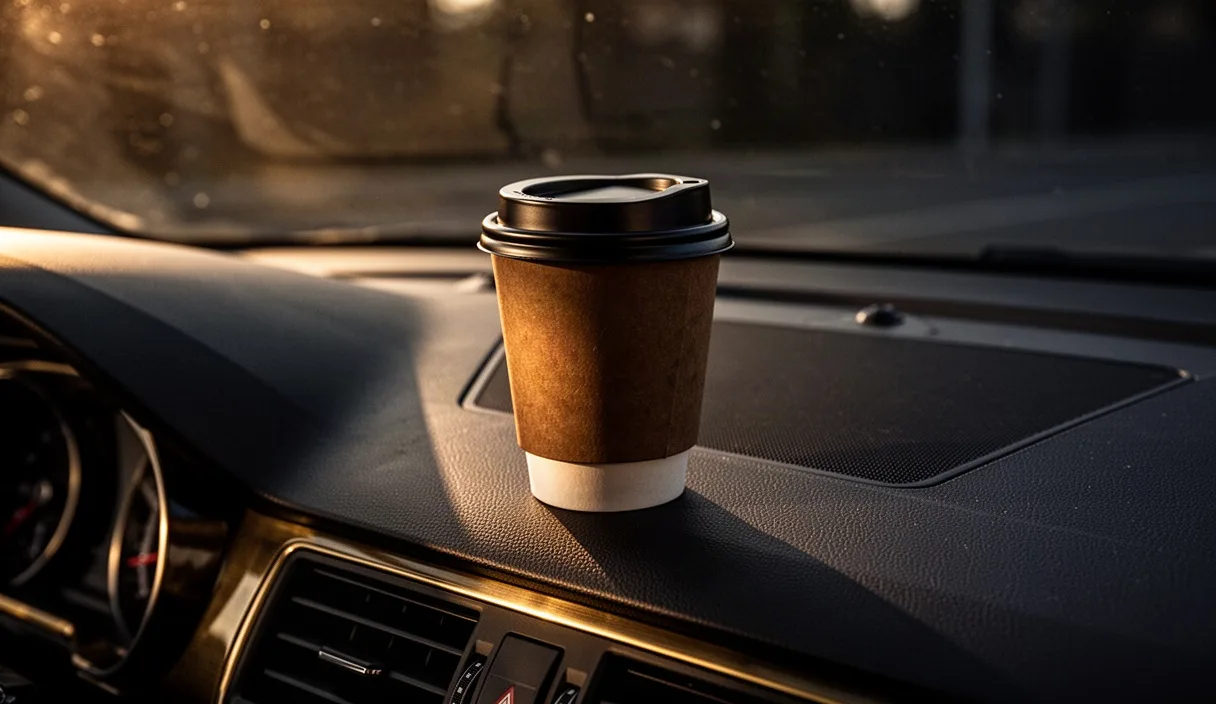
Ask around your local diner counter at 2 p.m. and you'll find at least three regulars ordering "one more, to go" before they head back to work. It's a habit as old as the coffee pot itself, that afternoon cup that gets you through the slow stretch between lunch and quitting time. But if you've been waking up at 3 a.m. staring at the ceiling fan, or lying there while the house settles and sleep just won't come, that afternoon order might be part of the problem.
Caffeine doesn't clock out when you do. It lingers in your system long after the mug is empty and the cup is rinsed, working quietly on the same chemistry your body needs to wind down at night. This piece breaks down what's actually happening when you drink that 2 p.m. coffee, why the clock on the wall matters less than the clock inside your liver, and how to figure out your own cutoff without guesswork.
How caffeine actually works in the body
Caffeine's main trick is blocking adenosine, a chemical that builds up in your brain all day and makes you feel sleepy by evening. Think of adenosine as sand filling an hourglass since the moment you woke up. Caffeine doesn't stop the sand from falling, it just plugs the receptors that would normally register how full the glass has gotten. You still feel alert, but the sleep pressure is quietly accumulating underneath.
Absorption happens fast. Most people hit peak blood concentration somewhere between 30 and 60 minutes after drinking a cup, depending on what else is in their stomach. A coffee grabbed on an empty stomach on the walk to the bus stop will hit harder and sooner than one sipped slowly alongside a sandwich at your desk.
Once caffeine is blocking those receptors, it also nudges your body to release a bit of adrenaline and dopamine, which is part of why that afternoon cup feels like a genuine lift and not just a placebo. The catch is that when the caffeine eventually clears, all that accumulated adenosine is still waiting, and it can hit you with a rebound tiredness later in the evening, sometimes right when you're trying to enjoy a quiet hour before bed.
Why the half-life matters more than the time you drank it
Here's the number that matters more than the clock: caffeine's half-life in a healthy adult averages around 5 to 6 hours, though it can range from 3 hours in a fast metabolizer to 9 or 10 hours in someone whose liver processes it slowly. That means if you drink a coffee with 100 milligrams of caffeine at 3 p.m., you could still have roughly 50 milligrams circulating at 9 p.m., and around 25 milligrams left by 3 a.m.
That leftover 25 milligrams doesn't sound like much, but it's enough to keep some people from reaching deep sleep as easily, or to cause more frequent waking in the second half of the night. This is the piece that trips people up: they don't feel "wired" at bedtime, so they assume the coffee wore off. Feeling awake and having active caffeine in your bloodstream are two different things.
Genetics play a real role here. A gene called CYP1A2 controls how fast your liver breaks caffeine down. People with the fast-metabolizing version can drink an afternoon espresso and barely notice it by bedtime. People with the slow-metabolizing version, and this is a meaningful chunk of the population, can still have a quarter of that dose in their system when the alarm goes off. Age, pregnancy, certain medications, and even smoking status also shift the half-life, so what worked for you in your twenties may not work the same way now.
Common drink sizes and their rough caffeine content
Portion sizes at the corner coffee shop have crept up over the years, and it's easy to lose track of how much caffeine is actually in your cup versus how much you think is in it. A "small" at one chain can be bigger than a "large" was a decade ago.
- Drip coffee, 8 oz: roughly 95 to 165 mg, depending on the roast and brew strength
- Drip coffee, 16 oz (a typical large): roughly 190 to 330 mg
- Espresso shot, single: roughly 60 to 75 mg
- Latte or cappuccino, 12 oz: roughly 65 to 130 mg, since it's usually one or two shots diluted with milk
- Cold brew, 16 oz: roughly 150 to 300 mg, since cold brew concentrate is often stronger than hot drip
- Black or green tea, 8 oz: roughly 30 to 70 mg
- Energy drink, 8 oz can: roughly 70 to 100 mg, though many cans are 16 oz and double that
- Dark chocolate, 1 oz square: roughly 20 to 25 mg, easy to forget about but it adds up if it's your after-dinner habit
Notice that a single afternoon stop for a large cold brew can add up to more caffeine than two regular coffees combined. If you're the type to order the biggest size out of habit, that alone might explain a sleep problem that a smaller pour wouldn't cause.
Signs your afternoon coffee is affecting your sleep
The most obvious sign is taking longer than 20 or 30 minutes to fall asleep after you turn off the light, especially if that's new behavior and not how you've always been. A second, quieter sign is waking around 2 or 3 a.m. and being fully alert rather than drowsy, which can point to that lingering half-dose of caffeine interrupting your deeper sleep stages.
Some people notice their sleep feels technically long enough, eight hours in bed, but shallow, like they never quite sink into it. Caffeine is known to reduce the amount of slow-wave sleep, the deep, restorative stage that happens mostly in the first half of the night. You might not remember waking up, but you can feel the difference the next afternoon in the form of low energy despite a "full" night.
A third sign, often overlooked, is needing caffeine earlier and earlier the next day to feel normal. This can create a loop: afternoon coffee disrupts sleep, poor sleep makes the next morning rougher, so you reach for coffee sooner, which pushes your afternoon cup earlier too, but the total daily intake keeps climbing. If you notice your "last coffee of the day" creeping later while your morning cup creeps earlier, that's worth paying attention to.
How to test and adjust your own cutoff time
The most reliable way to find your personal cutoff isn't a formula, it's a short experiment. Keep a simple sleep and caffeine log for one week: note the time of your last caffeinated drink each day, roughly how many milligrams it was, what time you got in bed, how long it took to fall asleep, and how many times you woke overnight.
- Week one: keep your normal habits and just log everything, including that 4 p.m. stop at the drive-thru.
- Week two: move your last caffeinated drink one hour earlier than your usual habit, keeping everything else the same, and keep logging.
- Week three: move it another hour earlier if you didn't notice a change, or hold steady if you did.
- Compare the three weeks side by side, paying attention to how long it took to fall asleep and how many times you woke up, not just how tired you felt.
Most people find their personal cutoff lands somewhere between 6 and 9 hours before bedtime, though slow metabolizers may need closer to 10. If you go to bed around 10:30 p.m., that could mean your last cup needs to happen by 1:30 or 2:30 p.m. rather than the traditional "no caffeine after noon" advice you might have heard, since that rule is really a rough average, not a rule that fits everyone.
If you've tried adjusting your timing for several weeks and sleep still isn't improving, or if you're relying on caffeine to manage daytime fatigue that feels out of proportion to your sleep habits, it's worth talking to a doctor. Persistent restful sleep support, frequent night waking, or excessive daytime sleepiness can have causes unrelated to caffeine, and a healthcare provider is better positioned to sort that out than a log kept on your phone.
A simple timing reference table
This table assumes a typical bedtime and average metabolism, so treat it as a starting point rather than a fixed rule. Adjust earlier if you know you're a slow metabolizer or if you're sensitive to caffeine generally.
| Bedtime | Suggested last caffeine (average metabolism) | Suggested last caffeine (slow metabolism) |
|---|---|---|
| 9:30 p.m. | 1:30 p.m. | 11:30 a.m. |
| 10:00 p.m. | 2:00 p.m. | 12:00 p.m. |
| 10:30 p.m. | 2:30 p.m. | 12:30 p.m. |
| 11:00 p.m. | 3:00 p.m. | 1:00 p.m. |
| 11:30 p.m. | 3:30 p.m. | 1:30 p.m. |
Common mistakes
One common mistake is judging caffeine's effect only by how alert you feel at bedtime, rather than by what's actually happening during the night. Another is forgetting about hidden sources, that after-dinner chocolate square, the iced tea with lunch, the pre-workout drink squeezed in before an evening gym session. People also tend to cut caffeine cold on a Saturday to "catch up" on sleep, then go right back to the old schedule Monday, which doesn't give the body's actual rhythm time to reset. Finally, switching to decaf without checking labels can backfire, since many decaf coffees still carry a small amount of caffeine, usually 2 to 15 mg per cup, which matters little for most people but can matter for someone especially sensitive.
What to try this week
Start with the log, not the guesswork. For the next seven days, write down every caffeinated drink and the time you had it, right alongside your bedtime and how the night actually went. At the end of the week, look for patterns rather than single bad nights, since one rough night can happen for a dozen reasons that have nothing to do with your coffee run.
If the pattern points to your afternoon habit, shift your last cup back by an hour and give it a full week before judging the result. Small, steady adjustments tend to reveal more than dramatic changes, and they're easier to stick with through a normal work week. And if sleep troubles continue once caffeine timing is no longer the obvious culprit, bring your log to a doctor. It's useful, concrete information that can help them figure out what else might be going on.